


Missing teeth can affect more than your smile. They may make chewing difficult, influence speech, and affect your confidence. Whether you have lost one tooth or several teeth, dental implants can be an option for restoring your smile and improving oral function.
At Smiley Dental Clinic, Bhiwandi, we help patients understand different tooth replacement options, including dental implants, bridges, and dentures. The most appropriate treatment depends on your oral health, bone condition, medical history, and individual needs.
What Are Dental Implants?
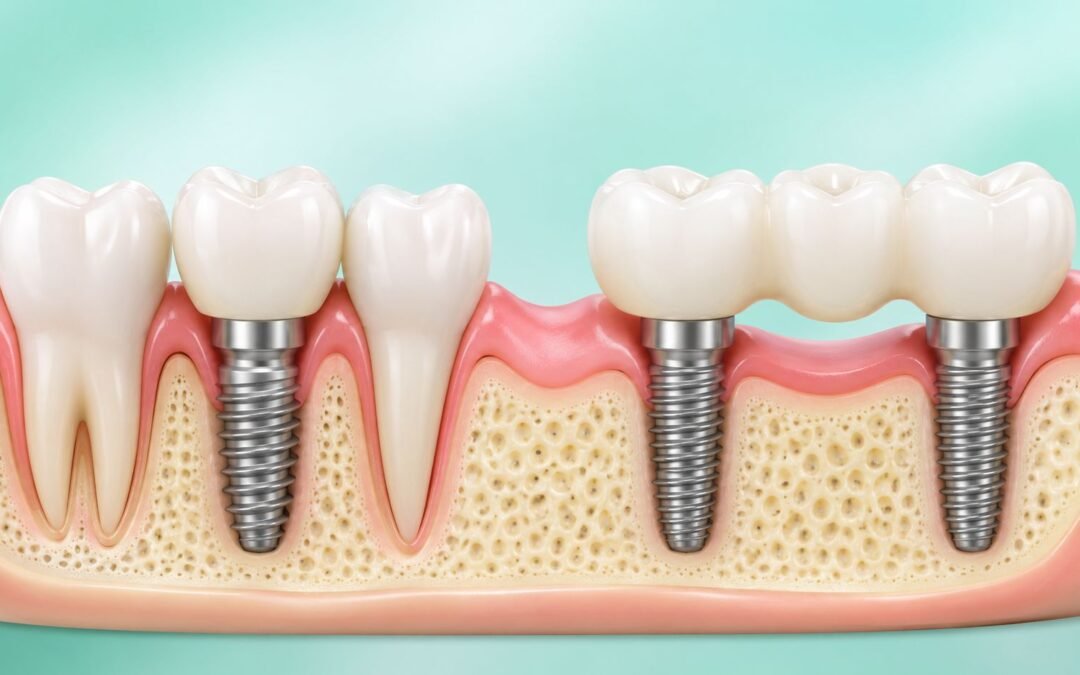
Dental implants are artificial tooth roots, usually made of biocompatible titanium, that are placed into the jawbone to support replacement teeth. After healing, they can support a dental crown, an implant-supported bridge, or an implant-supported denture.
Unlike conventional bridges, implants do not usually require the neighbouring teeth to be prepared for support. They can replace a single missing tooth or help restore several missing teeth, depending on the treatment plan.
Dental Implants for a Single Missing Tooth
A single dental implant is commonly considered when one tooth is missing because of decay, injury, gum disease, or extraction.
The implant is placed in the jawbone and, after suitable healing, a custom-made crown is attached to restore the missing tooth. The crown is designed to complement the surrounding teeth in shape, colour, and function.
Benefits of a single-tooth implant include:
> Replacing the missing tooth without routinely altering adjacent healthy teeth.
> Restoring chewing function and the appearance of your smile.
> Providing a fixed tooth replacement that does not need to be removed for daily cleaning.
> Helping maintain bone in the area where the implant is placed.
However, suitability depends on the condition of the jawbone, gums, and surrounding teeth.
Dental Implants for Multiple Missing Teeth
When several teeth are missing, dental implants offer different treatment possibilities depending on their location and the number of teeth involved.
1. Multiple Individual Implants
Separate implants with individual crowns may be suitable when several teeth are missing in different areas and sufficient bone is available. Your dentist will assess whether individual implants or another restoration would be more appropriate.
2. Implant-Supported Bridges
When several neighbouring teeth are missing, a bridge supported by strategically placed implants may replace multiple teeth. This approach can reduce the number of implants needed compared with replacing every missing tooth individually.
3. Implant-Supported Dentures
For patients missing most or all teeth, implants can help stabilise a removable denture or support a fixed full-arch restoration. The number and position of implants depend on bone availability, the desired restoration, and the clinical assessment.
These options can improve stability and chewing comfort compared with some conventional removable dentures, although outcomes vary between individuals.
What Is the Dental Implant Procedure?
Dental implant treatment generally involves several stages.
1. Consultation and assessment: Your dentist examines your teeth, gums, and bite and reviews your medical history. Dental X-rays or three-dimensional imaging may be recommended to assess bone volume and nearby anatomical structures.
2. Treatment planning: The dentist determines the implant position, type of restoration, and whether additional procedures, such as bone grafting, are necessary.
3. Implant placement: The implant is surgically placed into the jawbone under appropriate anaesthesia.
4. Healing and restoration: The implant is allowed to integrate with the bone. Once it is ready, the crown, bridge, or denture is attached. Treatment may take several months, depending on the case and healing response.
Who Is Suitable for Dental Implants?
Many adults with missing teeth may be candidates for dental implants. However, adequate bone, healthy gums, good oral hygiene, and appropriate overall health are important considerations.
Active gum disease should be treated before implant placement. Smoking, uncontrolled medical conditions, and certain medications may affect healing and complication risks. Patients with insufficient bone may require additional treatment.
A detailed dental evaluation is essential to determine suitability and discuss alternatives.
How Can You Maintain Your Dental Implants?
Dental implants require ongoing care. Brush twice daily, clean carefully around the implant restoration, and use interdental cleaning aids as recommended. Attend regular dental check-ups and professional maintenance appointments.
Avoid smoking where possible, and seek dental advice if an implant restoration becomes loose or painful. Although implants can last for many years, the implant and its restoration are not guaranteed to last a lifetime.
Frequently Asked Questions About Dental Implants
How long does dental implant treatment take?
In most cases, the full process takes a few months. The implant first needs time to bond with the jawbone before the final crown, bridge, or denture is fixed. If bone grafting is needed, the timeline can be longer.
Does getting a dental implant hurt?
Implant placement is done under local anaesthesia, so most patients feel pressure rather than sharp pain during the procedure. Some soreness or swelling for a few days afterwards is common, and your dentist will explain how to manage it.
Can one implant replace more than one missing tooth?
A single implant usually replaces one tooth. When several teeth are missing in a row, two or more implants can support an implant-supported bridge, which may reduce the total number of implants needed.
What is the cost of dental implants in Bhiwandi?
The cost of dental implants in Bhiwandi depends on the number of implants, the type of crown or restoration, the need for bone grafting, and the imaging required. A clear estimate can be shared only after a dental examination.
Dental Implants in Bhiwandi at Smiley Dental Clinic
Whether you are missing one tooth or multiple teeth, dental implants may offer a suitable way to restore oral function and appearance. At Smiley Dental Clinic, Bhiwandi, you can discuss your concerns and explore personalised tooth replacement options based on your dental needs.
Book a dental consultation to understand whether single-tooth implants, implant-supported bridges, or implant-supported dentures may be appropriate for you. A carefully planned treatment and consistent maintenance can help support long-term oral health.