


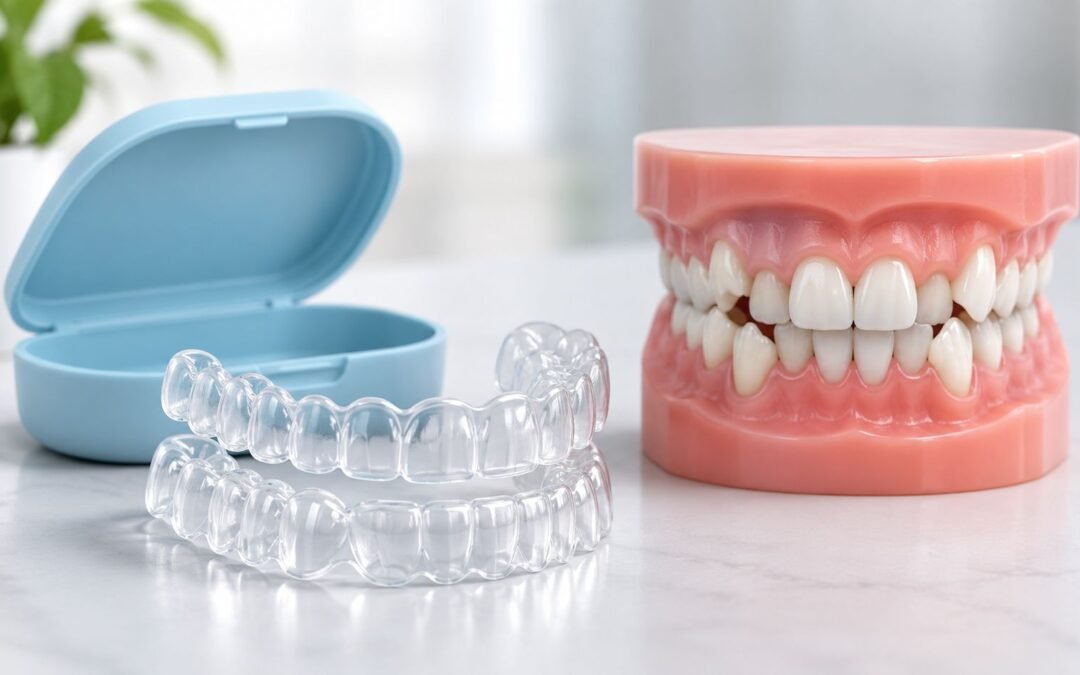
A straight, well-aligned smile can improve both dental function and confidence. Today, clear aligners have become a popular alternative to traditional braces because they are transparent, removable, and convenient for everyday life. However, an important question remains: Are clear aligners suitable for all types of teeth misalignment?
At Smiley Dental Clinic, Bhiwandi, we believe that understanding your orthodontic needs is the first step towards choosing the right treatment. While clear aligners can correct many common alignment problems, they may not be suitable for every case. The best treatment depends on the complexity of the misalignment, your bite, and your overall oral health.
What Are Clear Aligners?
Clear aligners are custom-made, transparent trays designed to gradually move teeth into their planned positions. They are created using digital dental scans and treatment planning technology. Patients wear a series of aligners, changing them at prescribed intervals as their teeth gradually move.
Unlike traditional braces, clear aligners do not use fixed metal brackets and wires. They can be removed while eating, drinking anything other than water, brushing, and flossing. However, successful treatment requires consistent wear, usually around 20-22 hours daily, or as directed by your orthodontist.
Which Types of Teeth Misalignment Can Clear Aligners Correct?
Clear aligners can treat several common orthodontic conditions, depending on their severity.
1. Crowded Teeth
Crowding occurs when there is insufficient space in the jaw for all teeth to align properly. Mild to moderate crowding can often be managed with clear aligners. More severe crowding may require additional procedures or alternative orthodontic treatment.
2. Gaps Between Teeth
Spaces between teeth, known as spacing or diastema, can often be corrected using clear aligners. Treatment can gradually bring teeth closer together, although the underlying cause of the gaps must also be evaluated.
3. Overbite
An overbite describes the vertical overlap of the upper front teeth over the lower front teeth. Selected cases can be treated with clear aligners, but deep or complex bites may require additional orthodontic techniques.
4. Underbite
An underbite occurs when the lower front teeth sit ahead of the upper front teeth. Mild dental underbites may respond to aligner treatment. However, severe underbites caused by differences in jaw growth may require full orthodontic treatment and, in some cases, jaw surgery.
5. Crossbite
A crossbite occurs when some upper teeth bite inside the lower teeth. Certain crossbites can be corrected with aligners, while complex cases may need attachments, expansion techniques, or other orthodontic appliances.
6. Open Bite
An open bite occurs when the upper and lower front teeth do not meet when the back teeth are closed. Selected cases can be treated with clear aligners, but the cause and severity of the open bite influence treatment success.
When Might Clear Aligners Not Be the Best Option?
Although aligner technology has advanced considerably, some conditions require more complex treatment planning.
Clear aligners may be less suitable as a standalone treatment for:
> Severe crowding requiring significant tooth movement.
> Complex bite problems involving multiple teeth.
> Major jaw discrepancies caused by skeletal differences.
> Teeth requiring difficult rotations or substantial vertical movement.
> Cases involving certain impacted teeth or significant periodontal problems.
In these situations, fixed braces, a combination of orthodontic techniques, or surgical treatment may provide a more predictable approach. The decision should always be based on an individual clinical assessment rather than the appearance of the teeth alone.
Clear Aligners vs Traditional Braces
Both treatment options can straighten teeth effectively when appropriately selected.
Clear aligners offer a discreet appearance, removability, and easier access for brushing and flossing. However, they require discipline and consistent wear.
Traditional braces remain a reliable option for many simple and complex orthodontic cases. Because they are fixed to the teeth, they do not depend on patients remembering to wear them. Your dentist or orthodontist can explain which approach best suits your specific needs.
What Determines Your Suitability for Clear Aligners?
Before recommending treatment, your dental professional will assess your tooth alignment, bite relationship, gum health, available space, and jaw position. Digital scans, photographs, and dental X-rays may be required depending on your clinical needs.
Your commitment also matters. Wearing aligners for the recommended duration and attending follow-up appointments are essential for achieving the planned results.
Frequently Asked Questions About Clear Aligners
How long does clear aligner treatment usually take?
Treatment time depends on how much the teeth need to move. Mild cases may finish in several months, while more complex cases can take longer. Your dentist can give an estimate after reviewing your scans and bite.
Are clear aligners suitable for adults?
Yes, many adults choose clear aligners. Age by itself is not usually a barrier, but the gums and supporting bone need to be healthy before the teeth are moved.
What happens if I do not wear my aligners for enough hours each day?
The teeth may not move as planned. This can lengthen treatment or mean that extra aligners are needed, which is why the recommended daily wear time matters.
Will I need a retainer after clear aligner treatment?
In most cases, yes. Teeth tend to shift back after orthodontic treatment, so a retainer is usually advised to help hold them in their new position.
Clear Aligners in Bhiwandi at Smiley Dental Clinic
If you are considering clear aligners, a professional orthodontic evaluation can help determine whether they are appropriate for your smile. At Smiley Dental Clinic, Bhiwandi, we focus on understanding each patient’s dental concerns and discussing suitable treatment options.
The bottom line: Clear aligners can correct many types of teeth misalignment, but they are not the ideal solution for every patient. A personalised assessment is the best way to understand your options and plan appropriate orthodontic care.
Consult a qualified dental professional to explore whether clear aligners or traditional braces are right for you.