


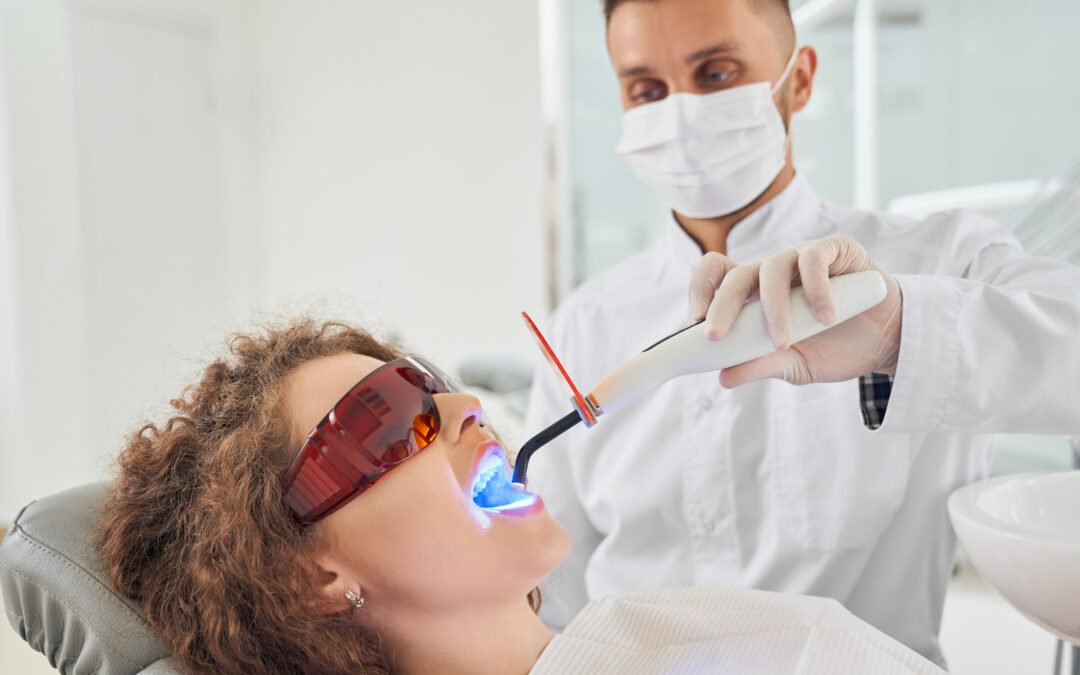
Modern dentistry is becoming more comfortable, precise, and patient-friendly with the help of advanced technology. Laser dentistry is one such innovation. Dental lasers use focused light energy to treat selected dental and gum conditions. Depending on the type of laser, they can be used for soft tissues, hard tissues, or as an additional tool during certain dental procedures.
At Smiley Dental Clinic, Bhiwandi, laser technology can be used in carefully selected cases to support comfortable and minimally invasive dental treatment. However, laser dentistry does not replace conventional dental treatment in every situation. Your dentist decides whether a laser is appropriate based on your individual oral health needs.
What Is Laser Dentistry?
Laser dentistry uses concentrated light energy to work on specific areas of the mouth. Different dental lasers have different wavelengths and applications. They may be used for gum procedures, selected tooth treatments, periodontal therapy, and other soft-tissue procedures.
Research suggests that lasers can provide useful benefits in selected periodontal treatments, particularly when used as an adjunct to conventional dental treatment, rather than as a complete replacement for standard instruments.
Here are seven potential benefits of laser dentistry.
1. More Precise Treatment
One of the important advantages of laser dental treatment is precision. Laser energy can be directed at a specific area, allowing the dentist to treat targeted tissue while aiming to preserve surrounding healthy tissue.
This precision can be particularly useful during certain soft-tissue procedures, where controlled removal of unwanted or diseased tissue is required.
2. Less Bleeding During Some Procedures
Lasers can help control bleeding during selected soft-tissue treatments. This may provide the dentist with a clearer treatment area and can make certain procedures more comfortable for patients.
Laser energy can also seal small blood vessels during treatment, although the amount of bleeding depends on the procedure, laser type, and individual patient factors.
3. Potentially Less Discomfort
For some dental procedures, laser treatment may reduce discomfort and the need for extensive conventional instrumentation. Some patients may also feel less anxious because lasers can reduce the need for drills or other traditional instruments in selected situations.
However, laser dentistry is not automatically pain-free. The amount of discomfort depends on the treatment being performed, the area being treated, and the patient’s sensitivity.
4. May Support Faster Healing
Another potential benefit of laser treatment in dentistry is its effect on soft-tissue healing. Because lasers can provide controlled treatment with limited tissue trauma in appropriate cases, recovery may be easier for some patients.
Certain laser applications are also being studied for their effects on inflammation and tissue healing. However, results vary depending on the laser type, treatment protocol, and dental condition.
5. Useful in Gum Disease Treatment
Laser technology has been investigated as an additional tool for treating periodontal disease. Lasers may help target bacteria and diseased tissue in selected periodontal procedures.
Research indicates that laser-assisted periodontal therapy can provide additional short-term improvements in some clinical measurements when combined with conventional scaling and root planing. However, the evidence is mixed, and lasers should generally be viewed as a complement to conventional periodontal treatment, not a universal replacement for it.
6. Minimally Invasive Approach
Many patients prefer dental procedures that involve less tissue trauma and greater precision. Depending on the treatment, laser dentistry can offer a minimally invasive approach to certain soft-tissue procedures.
The exact benefits vary according to the laser wavelength, energy settings, treatment area, and dental condition. Therefore, an experienced dentist should select the appropriate laser and treatment protocol for each patient.
7. Can Improve the Overall Patient Experience
Modern technology can make dental treatment more comfortable and controlled. Reduced bleeding, targeted treatment, potentially less discomfort, and easier management of certain soft-tissue procedures may contribute to a better overall dental experience.
For patients who are nervous about dental treatment, laser dentistry may also be helpful in selected procedures because it can reduce reliance on some traditional instruments.
Is Laser Dentistry Suitable for Everyone?
No. Laser dentistry is not required for every dental problem. Its effectiveness depends on the type of laser, the condition being treated, and the individual patient’s needs.
For example, conventional scaling and root planing remains an important standard treatment for periodontal disease. Current research suggests that lasers may provide additional benefits in selected cases, but they should not be promoted as a replacement for evidence-based conventional treatment.
Your dentist can evaluate your teeth, gums, and overall oral health before recommending laser treatment.
Conclusion
Laser dentistry represents an important advancement in modern dental care. Its potential benefits include greater precision, reduced bleeding, improved comfort, minimally invasive treatment, and useful applications in selected gum procedures.
At Smiley Dental Clinic, Bhiwandi, we combine modern dental technology with personalised treatment planning to provide safe and effective care. If you are considering laser dental treatment in Bhiwandi, consult our dental team to find out whether laser dentistry is suitable for your specific condition.